Nature Electronics
The underlying hydrogen-sensing work has been published in Nature Electronics.
Distributed hydrogen safety
Ultra-low-power hydrogen sensors that make invisible leaks measurable early, clearly, and across many monitoring points.
The underlying hydrogen-sensing work has been published in Nature Electronics.
Development has been supported by the UK national institute for advanced materials.
Finalist in the Royal Society of Chemistry Emerging Technologies Competition.
The safety gap
Hydrogen is invisible and odourless, while leaks can spread quickly through production, storage, transport, and end-use environments. Aerio-X is developing compact sensing technology that converts small hydrogen exposures into a clear electrical signal, giving operators earlier visibility before a leak becomes a larger risk.
The goal is distributed monitoring: many low-power sensing points positioned around the equipment, rooms, vehicles, and infrastructure where hydrogen is produced, moved, stored, or used.
Technology
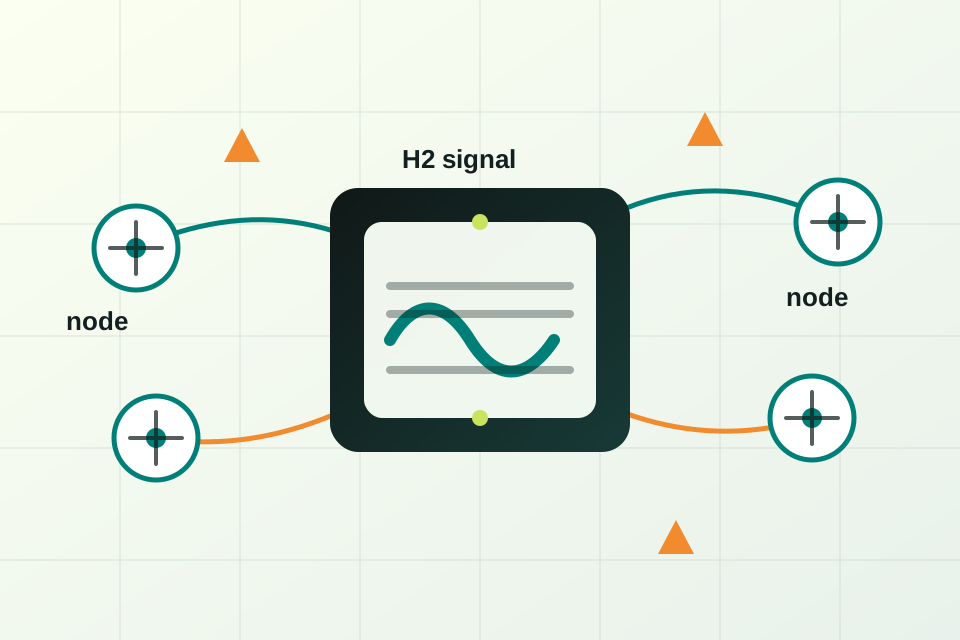
The sensing approach is based on an organic semiconductor layer whose electrical behaviour changes in the presence of hydrogen. That change can be read as a measurable current signal and integrated into connected monitoring hardware.
Peer-reviewed research in Nature Electronics reports rapid response, low detection limits, very low power consumption, and long continuous operation in ambient air.
Applications
Detect small hydrogen exposures before they develop into larger hazards.
Give operators a rapid electrical signal when hydrogen is present.
Support battery-powered sensing points and connected monitoring networks.
Fit into practical sensing modules for equipment, sites, and infrastructure.
Place more sensing points across production, storage, transport, and use cases.
Turn invisible hydrogen into a measurable signal for alerts and dashboards.
Contact
Use this route for pilot discussions, technical enquiries, or integration conversations.